
Shower vs Bath for UK Homes: When Showers Use More Water
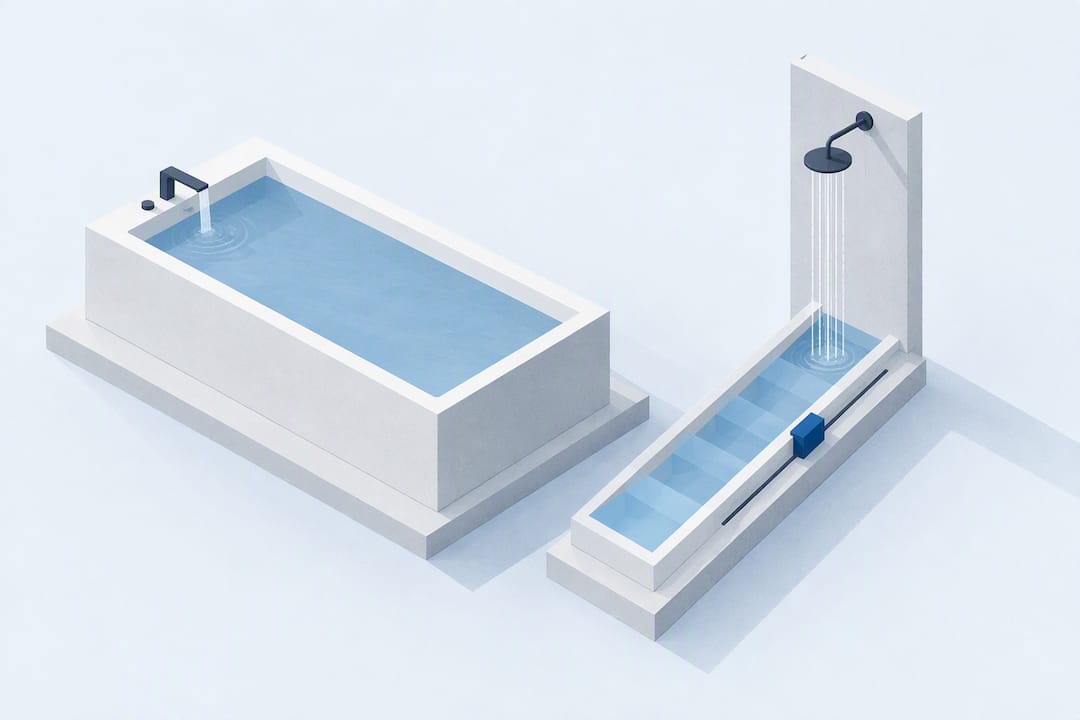
There is no single winner between a shower and a bath. Showers are usually faster, cleaner for everyday hygiene, and gentler on water and energy bills, while baths win for relaxation, muscle relief, and therapeutic soaking. The right choice depends on who is using the bathroom, how much time they have, and what the plumbing can support.
TL;DR:
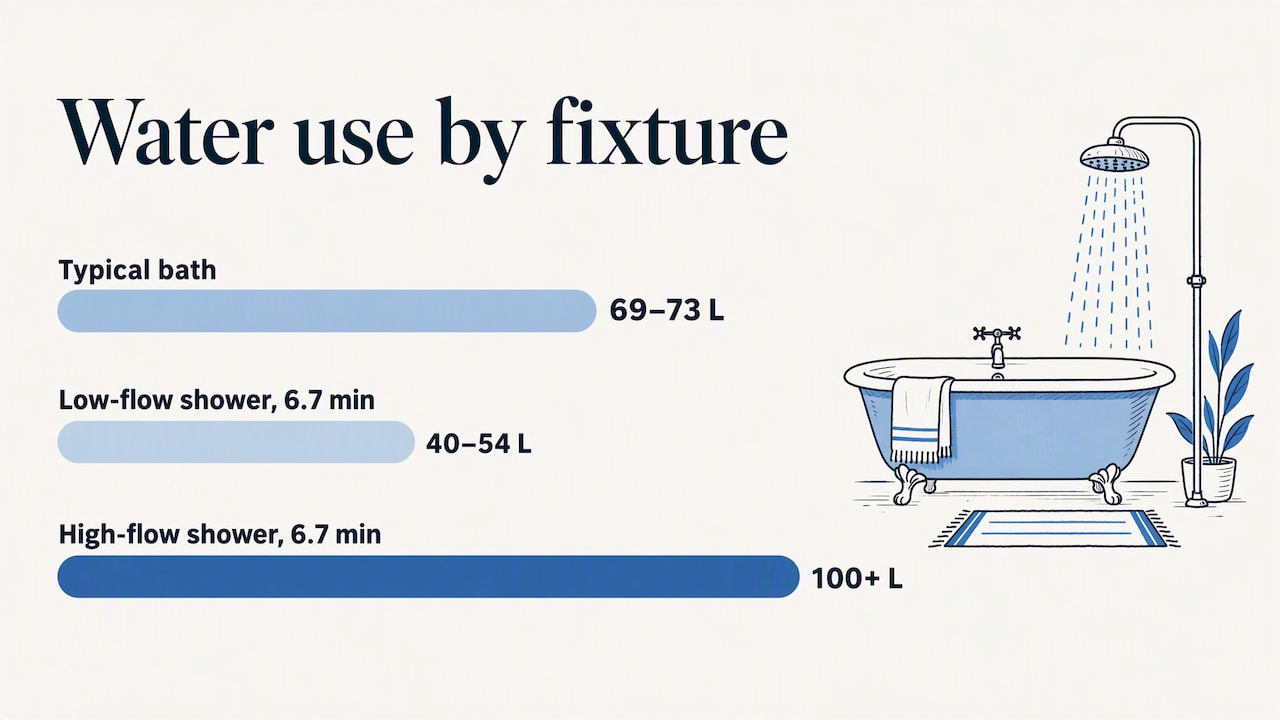
- A low flow showerhead at 6–8 liters per minute uses about 40–54 liters over 6.7 minutes, below a typical 69–73 liter bath.
- A high flow power shower at 15–20 liters per minute can use 100 liters or more in 6.7 minutes, so check flow rate and shower length.
- A small trial of 38 people linked warm immersion with lower reported fatigue, stress, and pain than showering, but the findings are not conclusive.
- For adults, guidance caps bath water at 44°C and shower water at 41°C; children need lower limits, and a thermostatic mixing valve prevents temperature spikes.
- For mobility limits, a walk in or level access shower removes the tub entry step; grab rails, a nonslip mat, or a shower seat add support.
Table of Contents
- Shower vs bath at a glance
- Does a shower or bath clean you better?
- How much water and energy do baths and showers use?
- What are the health and relaxation effects of each?
- How safe are baths and showers, especially for kids and older adults?
- Who actually prefers a bath, and who prefers a shower?
- How do you choose for your household?
- What should you consider before renovating your bathroom?
- A practical take on the shower vs bath debate
- Get your bathroom renovated the right way
- FAQ
- Sources
Shower vs bath at a glance
Before picking a side, it helps to see how the two stack up on the things that actually matter to a household.
- Cleanliness: showers rinse dirt and oils away with running water; baths leave you sitting in the same water the whole time.
- Water use and cost: a low-flow shower often uses less water than a full bath, but a long shower with a high-flow head can use more, as Smart Energy GB explains.
- Health and relaxation: baths have a stronger case for stress relief and muscle relaxation; showers are quicker and more practical for daily cleaning.
- Safety: showers, especially walk-in models, tend to be safer for people with limited mobility; baths carry a higher slip risk getting in and out.
- Time and convenience: a shower typically takes a few minutes; a bath takes longer to fill, use, and drain.
Pick a shower if your priority is speed, hygiene after exercise, or accessibility for someone with mobility limits. Pick a bath if you are winding down in the evening, treating sore muscles, or bathing a young child who needs supervised, contained water. Many households end up wanting both, which is one reason shower-over-bath combinations remain so common in renovation projects.
Does a shower or bath clean you better?
The mechanics favor showers for most everyday cleaning. Running water continuously carries soap, oil, sweat, and loosened skin cells away from your body and down the drain. In a bath, you are sitting in the same water for the length of the soak, so anything that comes off your skin stays suspended around you until you drain the tub. That is why showers generally rinse away dirt and contaminants more effectively than immersion baths, since running water carries off the loosened oils and particles instead of leaving them in contact with the skin.
This does not mean a bath is unhygienic. For gentle cleaning, a relaxing soak, or bathing when standing is difficult, a bath still gets you clean. The difference shows up more with heavy dirt or after intense exercise, where sweat and grime are harder to shift without the mechanical rinsing action of a shower.
- Choose a shower after a workout, gardening, or any activity that leaves heavy sweat or dirt on your skin.
- Choose a bath when the goal is a slow soak rather than a quick scrub, or when a child needs a contained, supervised wash.
A small randomized crossover trial found that participants who took warming immersion baths reported better scores for fatigue, stress, and pain than when they showered without immersion, according to a study published on PMC. That finding speaks to relaxation benefits rather than cleaning power, which is a distinction worth keeping in mind when people say baths are “better” without specifying for what.
How much water and energy do baths and showers use?
Water and energy use come down to two numbers: how much water fills your tub, and how fast water flows through your showerhead multiplied by how long you stand under it.
- UK energy modelling uses a typical bath volume of around 69 to 73 liters of mixed water for a standard bath, based on the Home Energy Model’s domestic hot water assumptions.
- The same modelling assumes a median shower duration of several minutes, with mixed water temperature for both showers and baths modelled near 41°C.
- Flow rate is the variable that decides the outcome: a low-flow showerhead at 6 to 8 liters per minute over 6.7 minutes uses roughly 40 to 54 liters, well under a typical bath, while a high-flow power shower at 15 to 20 liters per minute over the same time can use 100 liters or more, closer to or above a full tub.
Fitting a water-efficient showerhead with a relatively low flow rate typically uses less water than filling a bathtub, according to Smart Energy GB’s comparison, though the actual gap depends entirely on your fixture and how long you linger.
If you want a real estimate for your own home, time how long you actually shower, then check your showerhead’s flow rate (often printed on the fitting or available from the manufacturer). Multiply flow rate by minutes to get liters used, then compare that to your bath’s fill line using a measuring jug for one fill. A ten-minute shower under a high-flow head can easily beat a bath on water use, while the same ten minutes under a low-flow head usually will not.
What are the health and relaxation effects of each?
Baths have the better case for relaxation. The randomized crossover trial on PMC found that immersion bathing at a warm temperature and moderate duration produced greater improvements in self-reported fatigue, stress, pain, and some mental health measures compared with showering without immersion, in a small study of 38 participants. That is a modest sample, so it points toward a benefit rather than proving one conclusively, but it lines up with what a lot of people already feel after a warm soak.
Skin is a different story. Hot showers, especially long ones, can strip natural oils and leave skin dry, which matters for anyone managing eczema or sensitive skin. Guidance from Shropshire, Telford and Wrekin’s primary care policy notes that bath emollient additives have not shown a clear clinical benefit for childhood eczema and can make the tub slippery, so leave-on emollients are the preferred option when skin support is needed.
- Keep water warm rather than hot: scalding temperatures feel good briefly but dry and irritate skin faster.
- Limit relaxation soaks to roughly 10 to 20 minutes to get the benefit without over-softening skin.
- Use leave-on emollients rather than pour-in bath additives if you have eczema-prone skin.
Pro Tip: If you want the relaxation benefit of a bath without the slip risk of oily additives, soak in plain warm water and apply a leave-on moisturizer once you’re out and dry.
How safe are baths and showers, especially for kids and older adults?
Scalding and slipping are the two safety issues that come up most, and both have clear thresholds to work from. Cambridgeshire and Peterborough NHS Foundation Trust’s safe bathing policy recommends maximum water temperatures of 44°C for baths and 41°C for showers for adults, with lower limits for children, along with pre-bathing temperature checks and the use of Thermostatic Mixing Valves (TMVs) to prevent sudden spikes in water temperature.
- Install a TMV to cap output temperature automatically, ideally at 43°C or lower, rather than relying on manual checks alone.
- Add grab rails and a non-slip mat for anyone with limited balance using a bath.
- Consider a bath board or shower seat for people who can get in but struggle to stand for long periods.
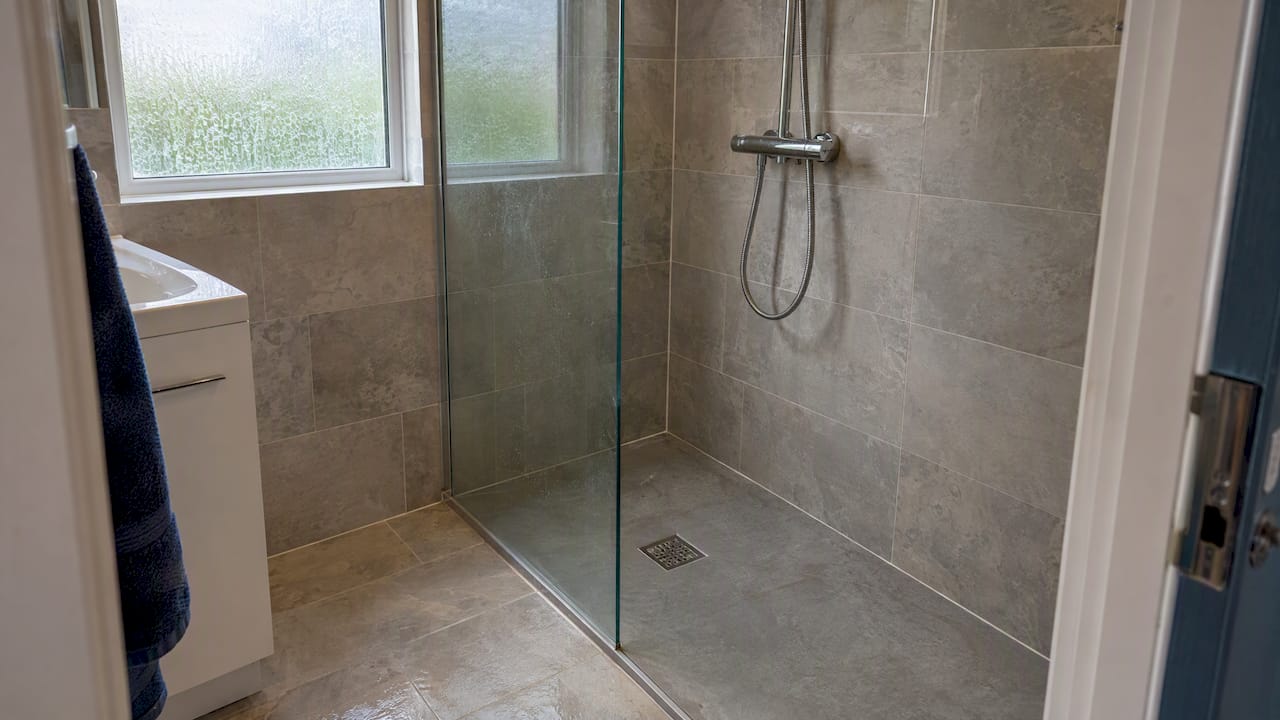
- Choose a walk-in or level-access shower for anyone with significant mobility limitations, since it removes the step-over hazard entirely.
Mobility issues tend to tip the decision toward showers, since climbing in and out of a tub is one of the more common fall points in a bathroom. A bath can still work for someone with limited mobility if it is fitted with the right support, but a walk-in shower generally needs fewer adaptations to be safe.
Pro Tip: If anyone in your household is over 65 or has balance concerns, a TMV plus a walk-in shower addresses both the scald risk and the slip risk in one upgrade.
Who actually prefers a bath, and who prefers a shower?
Preference usually tracks with lifestyle rather than age alone. People who want a fast, low-effort routine before work tend to default to showers, while people treating a stressful day or sore muscles reach for a bath. Households with young children often keep a tub around specifically for supervised, contained bath time, even if the adults shower daily.
- Busy commuters and anyone short on time generally favor showers for speed.
- Parents of toddlers and infants often rely on baths for easier, more controlled washing.
- People managing stress, insomnia, or muscle soreness tend to favor baths for the relaxation effect.
- Older adults with mobility concerns frequently shift toward showers, particularly walk-in designs, for safety.
Newer homes increasingly favor showers as the primary fixture, with a bath included mainly for resale value or occasional use rather than daily routine. That shift shows up in renovation requests too, where shower-over-bath setups let one fixture serve both needs without a full bathroom overhaul.
How do you choose for your household?
A short checklist beats a long debate. Walk through these points in order and the right setup usually becomes obvious.
- Primary need: is the main goal daily cleaning speed, or relaxation and soaking?
- Number of users and their ages: young children and multiple daily users often push toward keeping a bath, at least for now.
- Mobility: anyone with balance issues or joint pain shifts the decision toward a walk-in shower.
- Hot water system capacity: a combi boiler on demand handles showers easily but may struggle to fill a large bath quickly; a tank-fed system handles both but needs enough stored capacity.
- Space and plumbing: a shower enclosure needs less floor space than a full tub but still needs adequate drainage and, ideally, a TMV for safety.
- Resale value: many buyers still expect at least one bath in a family home, even if it is rarely used.
| Household type | Likely best fit |
|---|---|
| Young children at home | Keep a bath, add a shower-over-bath for flexibility |
| Mobility concerns or older adults | Walk-in shower with grab rails and a TMV |
| Single occupant, busy schedule | Shower only, low-flow head |
| Mixed household wanting both | Shower-over-bath with a detachable showerhead |
If you cannot choose, a mixed solution often solves the problem outright. A shower-over-bath, a detachable showerhead, and a TMV on the hot water line give you both options without a full bathroom rebuild, and they tend to be among the lowest-cost upgrades you can make to an existing layout.
What should you consider before renovating your bathroom?
Fitting a bath, a shower, or both well depends on plumbing details that are easy to overlook. Drainage needs to handle the volume you are putting through it, a combi boiler needs enough flow rate for a power shower, and a tank-fed system needs enough stored hot water for a full bath fill without running cold partway through.
We handle bathroom renovations, plumbing, tiling, and carpentry as part of project work, which covers fitting walk-in showers, installing TMVs for scald protection, and adapting bathrooms for better accessibility. Projects like these come up often in period properties and HMO conversions, where existing pipework was not always designed for a modern power shower or a reconfigured layout, so getting the plumbing assessment right before any tiling starts saves time and avoids costly rework later.
A practical take on the shower vs bath debate
Most people do not need to pick one fixture for life. Use a shower for the daily grind and keep a bath, or a shower-over-bath combination, for the nights you actually want to soak. The bigger lever most households ignore is a TMV and a low-flow showerhead, which quietly fix the safety and cost side of this decision without forcing anyone to give up what they prefer.
— Trey
Get your bathroom renovated the right way
We fit bathrooms that work for how your household actually lives, whether that means a walk-in shower with a TMV for safety, a shower-over-bath for flexibility, or a full renovation around a new tub.

- Bathroom renovations, plumbing, and tiling handled by one team from planning to finish.
- Accessibility adaptations including walk-in showers, grab rails, and TMV installation.
- Clear communication throughout the project.
If you’re planning a bathroom update, see the full range of our bathroom renovation and building services and request a quote for your project.
FAQ
What is the difference between a bath and a shower?
A bath involves sitting or soaking in a tub of standing water, while a shower uses continuously running water to rinse the body. The main practical difference is that showers wash dirt away as you go, while a bath leaves you in the same water throughout the soak.
Is it better to take a shower or bath?
Neither is universally better: showers are typically faster and cleaner for everyday hygiene, while baths offer stronger relaxation and muscle-relief benefits, as suggested by a small randomized trial. The better choice depends on whether your priority is speed and cleaning or stress relief and soaking.
Is a bath considered a shower?
No, a bath and a shower are different fixtures with different washing methods. A bath uses standing water for immersion, while a shower uses running water for rinsing, and the two are generally tracked separately in water and energy guidance like the Home Energy Model.
What uses more water, a 10-minute shower or a bath?
It depends on your showerhead’s flow rate. A low-flow showerhead using around 6 to 8 liters per minute will typically use less water over 10 minutes than filling a standard bath, but a high-flow power shower can use more than a full tub over the same time, according to Smart Energy GB.
Sources
- Immersion bathing vs showering randomized crossover trial — PMC
- HEMFHS-TP-04: Hot water usage assumptions in the Home Energy Model
- Safe bathing policy — Cambridgeshire and Peterborough NHS Foundation Trust
- Prescribing Bath and Shower preparations in Primary Care — Shropshire, Telford & Wrekin
- Bath vs shower: which is cheaper? — Smart Energy GB